Standing-wave defectoscopy
Diagnostics and monitoring of tanks and structuresA system for diagnosing tanks, buildings, and civil structures: sensors record structural vibrations, software processing identifies standing waves and natural mode shapes, and the engineer receives a map of defective zones, damage-development trends, and an estimate of residual life.
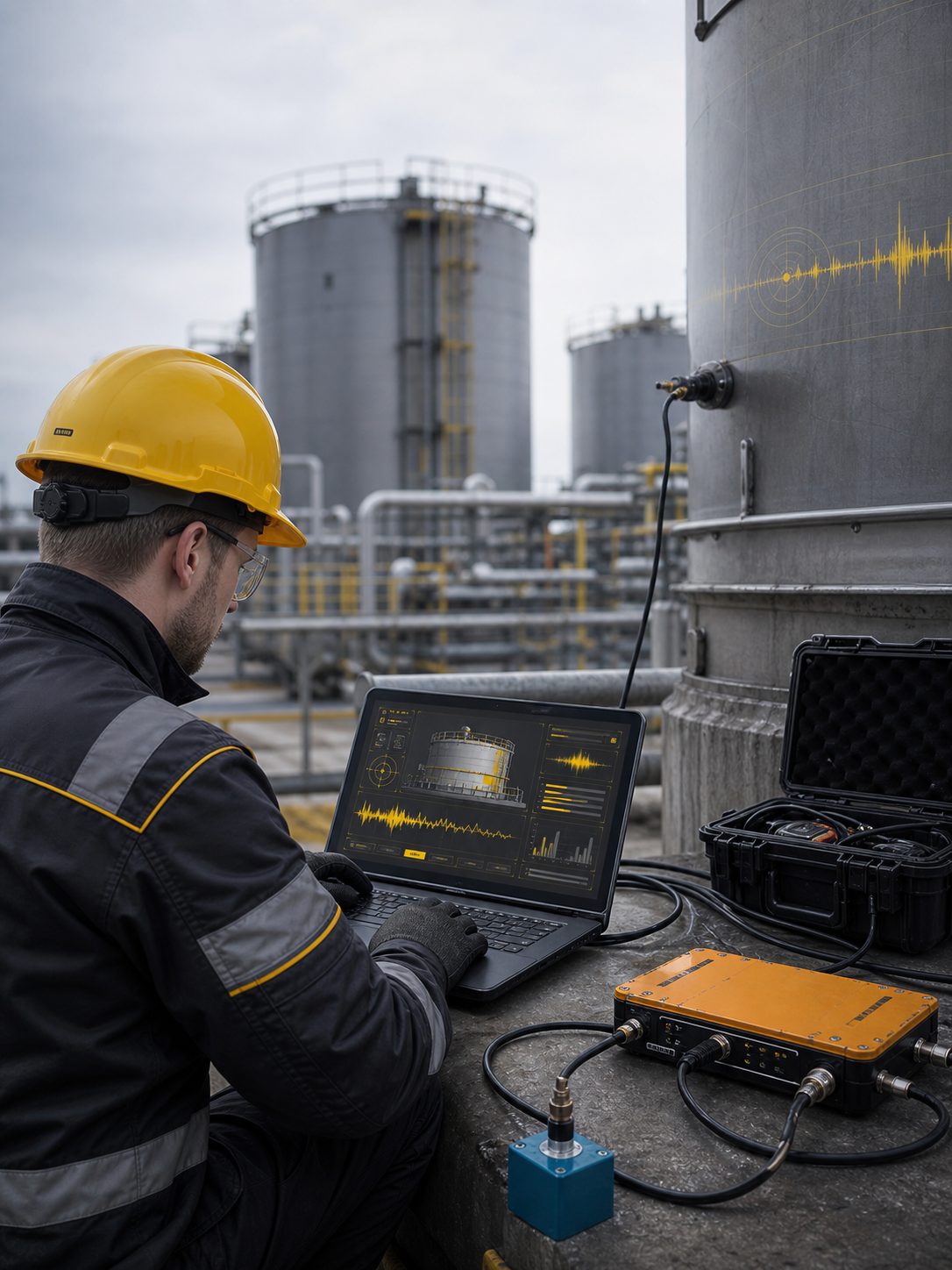
How the system works
The system records the asset’s natural and induced vibrations, normalises noisy data, splits the record into blocks, and builds an amplitude-frequency distribution along the structure under study. Changes in natural frequencies, amplitudes, and mode shapes help locate hidden defects and assess their development over time.
Sensors and vibration recording
Sensors are installed on the tank, building, or structure according to the inspection layout and record noise, microseismic, and vibration data without opening the structure.
Standing-wave identification
The software normalises the data, performs spectral processing, and identifies natural mode shapes that reveal anomalous zones and changes in structural stiffness.
Defect map and residual life
The output includes a map of defective zones, an estimate of residual life, and recommendations on where repair, monitoring, or additional instrumental inspection is needed.
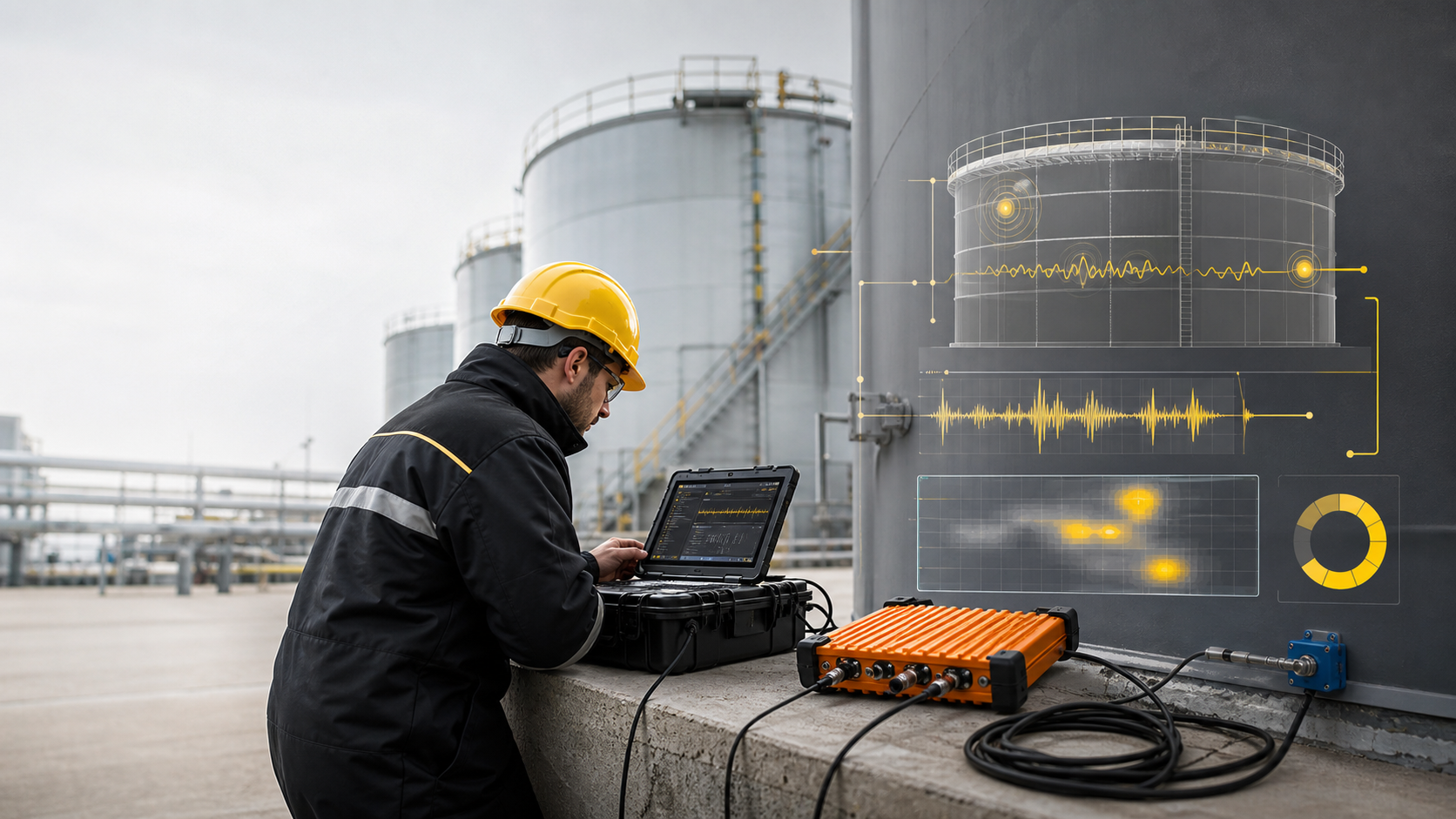
- Non-destructive testing: diagnostics without opening the asset or taking it out of service where regulations permit.
- Suitable for tanks, buildings, bridges, supports, pile foundations, and industrial structures.
- The method helps identify hidden defects that are not visible during visual inspection.
- Monitoring shows how a defect develops and helps shift from planned repair to condition-based repair.